

What Is the Difference Between Traditional Qigong and Bai Yin Contemporary Qigong?
Core Answer from the Master Bai Yin
Simply put: Traditional Qigong is the “ancient method,” while Bai Yin Qigong is the “evolved version.”
The biggest differences lie in targeted effectiveness and convenience.
Traditional Qigong often requires long periods of seated meditation, practice in specific environments (such as remote mountains), and is primarily aimed at longevity.
Bai Yin Qigong, on the other hand, has been redesigned specifically for modern lifestyles and modern ailments, such as autonomic nervous system imbalance, sleep disorders, and various forms of chronic pain.
We have incorporated exclusive guided-energy music and rhythm to help anxious minds quickly settle.
We have also integrated Qigong into daily life, so you don’t need to retreat into the mountains—you can practice targeted health management right in your living room.
This is a scientifically structured Qigong system designed so modern people can learn it easily, practice it consistently, and experience results quickly.
1. What Is the Difference Between Bai Yin Qigong and Traditional Qigong?
The biggest differences are targeted effectiveness and convenience.
Bai Yin Qigong is a form of medical Qigong tailored for modern people, based on over 30 years of real teaching experience.
Whenever new students enter the class and see everyone moving rhythmically to music, they often look puzzled:
“Master, this doesn’t look like the Qigong I imagined. Aren’t Qigong Masters on TV always sitting still with their eyes closed?”
That’s a very good question. Let me answer it from my 30+ years of teaching experience.
2. Tradition Is Precious, but What You Need Is a “Modern Solution”
There is no doubt that traditional Qigong is a priceless legacy of ancient wisdom.
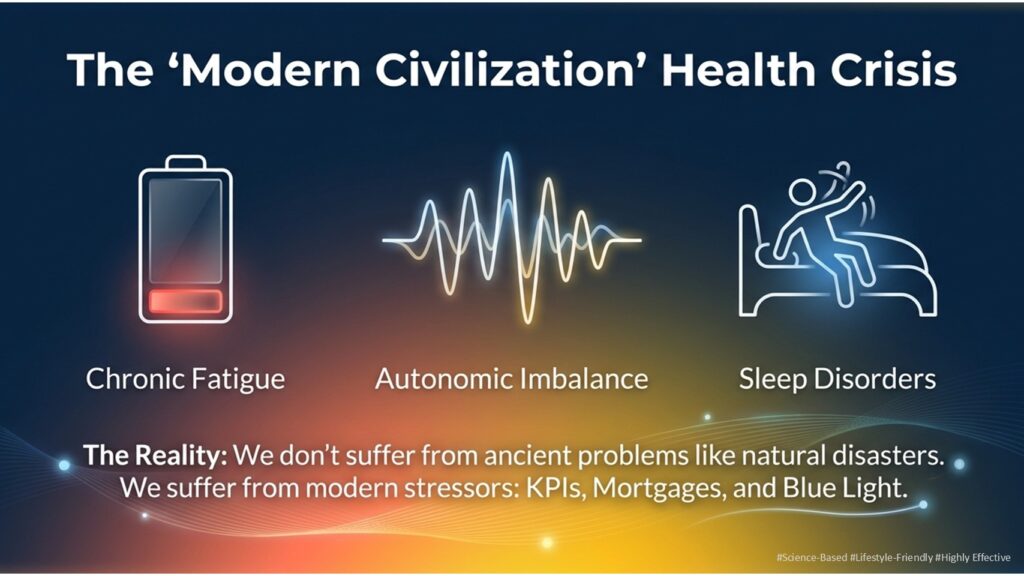
However, in real teaching environments, I’ve observed a harsh reality: modern bodies and lifestyles are completely different from those of ancient times.
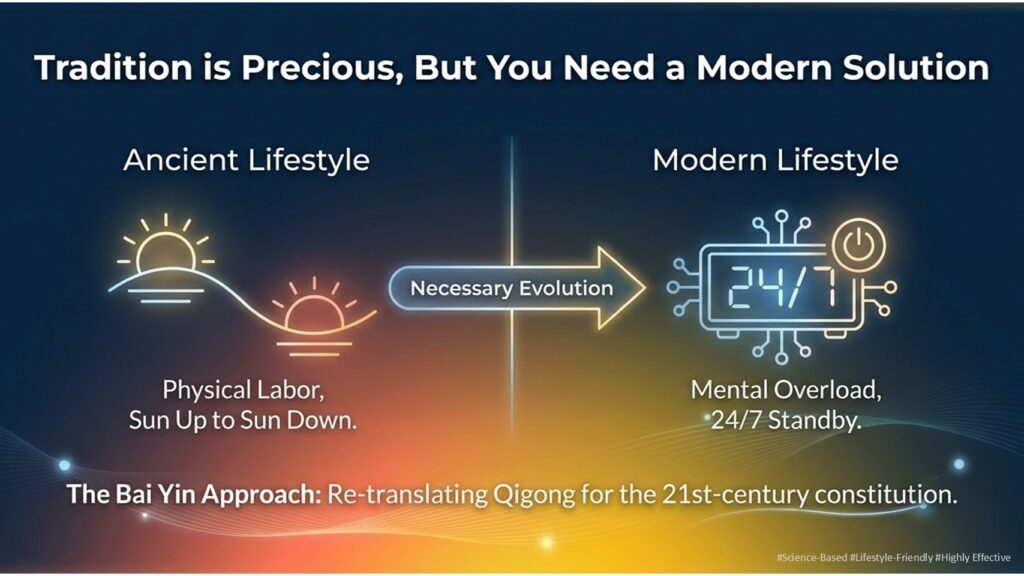
- Ancient people worked at sunrise and rested at sunset; modern people are on standby 24/7.
- Ancient stress came from natural disasters; modern stress comes from KPIs, mortgages, and parenting anxiety.
- Ancient people were not exposed to blue-light damage; modern people stare at screens for over 10 hours a day.
When the body’s conditions have completely changed, how can health-cultivation methods remain unchanged?
That is why I spent 30 years re-translating traditional Qigong into a version suitable for modern constitutions.
This is not a rejection of tradition—it is standing on the shoulders of giants and allowing necessary evolution.
3. Music and Rhythm: A “Stabilizer” for the Anxious Brain
Let me ask you a question:
If I asked you to close your eyes right now, think of nothing, and stand still for 30 minutes—what do you think would happen?
Based on my observations, 90% of people’s minds immediately start racing:
tomorrow’s meetings, to-do lists, household matters…
The more you try to calm down, the more thoughts arise. This is a modern epidemic—our brains are constantly overloaded.
Traditional Qigong emphasizes entering a state of stillness.
But for modern people who can’t even stop thinking when they sleep, this is nearly impossible.
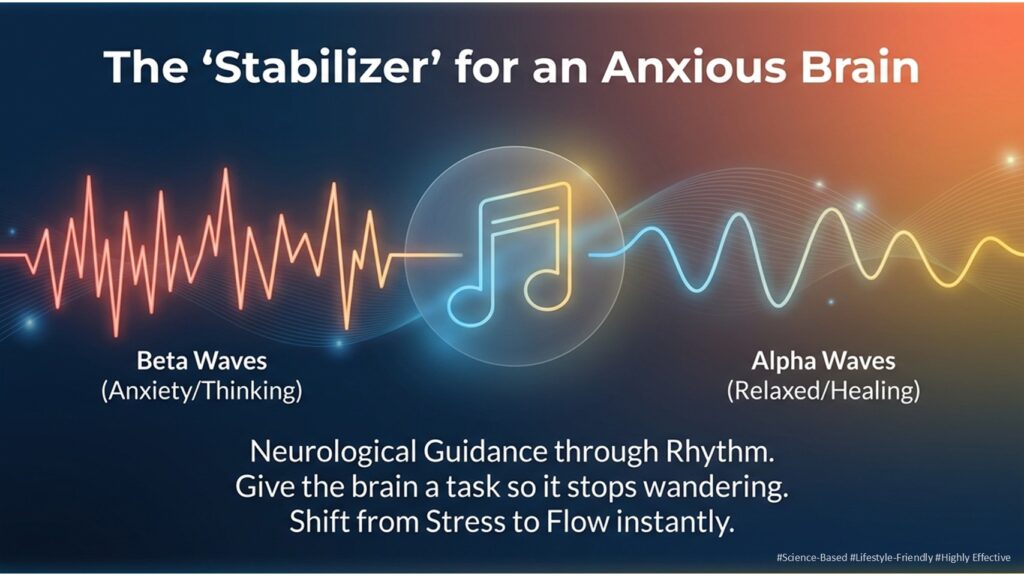
That’s why Bai Yin Qigong incorporates specific frequencies of music and rhythm.
This is not for entertainment—it is a form of neurological guidance.
When you move with rhythm and coordinate with breathing, the brain has a clear task and stops wandering aimlessly.
The music gradually guides brainwaves from anxious beta waves to relaxed alpha waves.
This is using scientific methods to achieve the traditional state of stillness.
4. From Remote Mountains into Daily Life: Making Health Cultivation Part of Everyday Living
In the past, practicing Qigong was a privilege for a few—either royalty or those who could abandon everything and retreat into the mountains.
But reality is:
You have work. You have family. You can’t disappear into the wilderness.
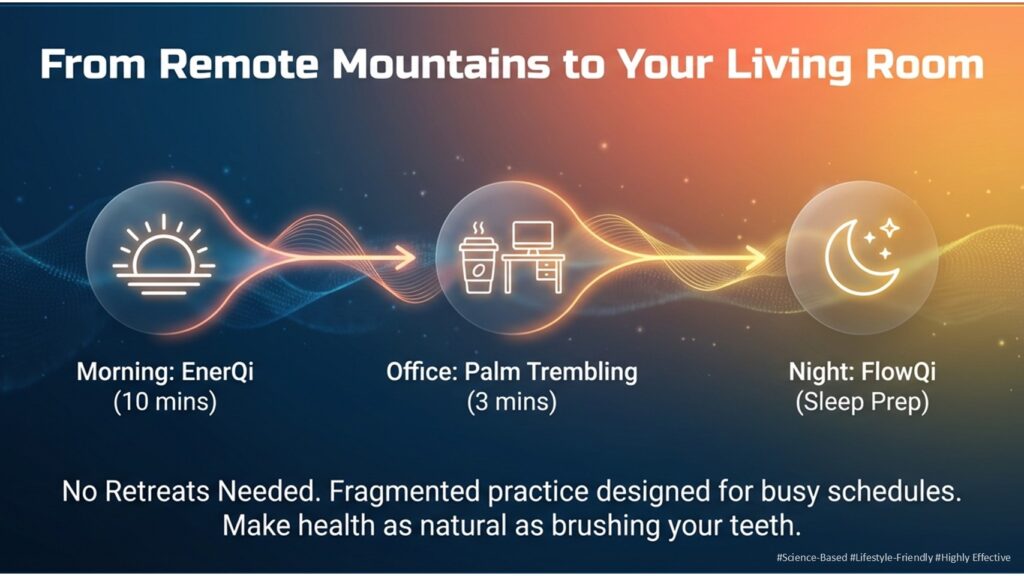
The greatest breakthrough of Bai Yin Qigong is making Qigong life-based and fragmented.
- Tired from sitting at the office?
→ 3 minutes of Palm Trembling Technique to refresh instantly. - Tossing and turning before sleep?
→ 10 minutes of FlowQi to help you fall asleep. - No energy in the morning?
→ 10 minutes of EnerQi Dayan to activate full-body circulation.
No special location required. No large time blocks needed.
Your living room, office, or hotel room can all be practice spaces.
I want Qigong to become as natural as brushing your teeth—a daily health habit, not an extra burden.
5. Precise Targeting: Addressing Modern Civilization-Related Illnesses
Over the past 30 years, I’ve seen health issues increasingly concentrated in these areas:
- Autonomic nervous system imbalance: palpitations, anxiety, IBS
- Sleep disorders: difficulty falling asleep, light sleep, early waking
- Chronic fatigue: exhaustion despite rest, brain fog, memory decline
- Musculoskeletal pain: stiff neck and shoulders, lower-back pain, knee degeneration
These are modern illnesses that ancient people rarely faced.
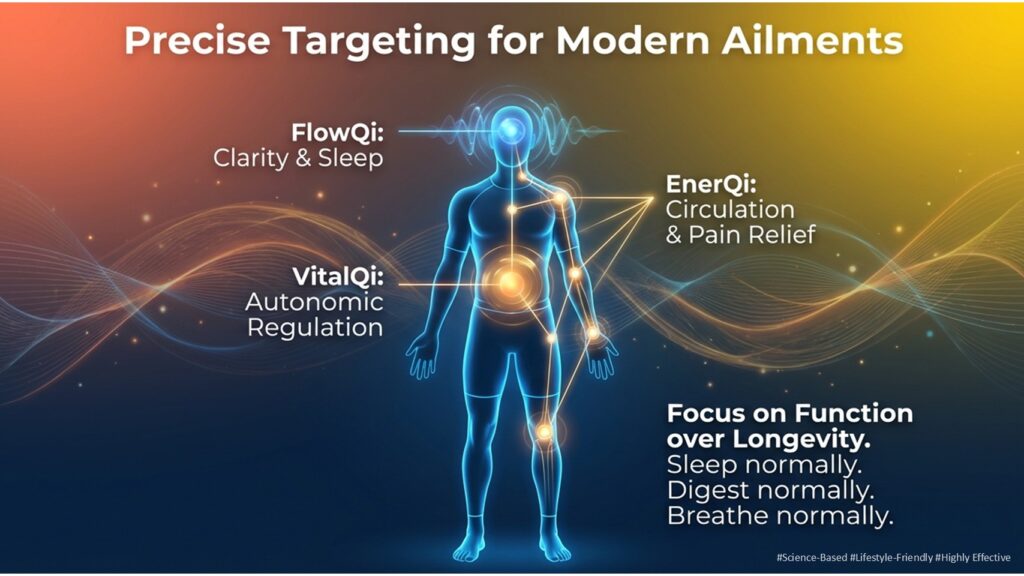
Traditional Qigong focuses on longevity.
Modern people, however, need restoration of normal function—
sleeping normally, digesting normally, breathing normally.
That’s why Bai Yin Qigong developed specific practices:
- VitalQi — regulates the autonomic nervous system
- FlowQi — improves sleep quality
- EnerQi — clears meridians
- YoungQi — improves endocrine imbalance
Each technique has been validated by tens of thousands of practitioners.
This is not theory—it is practical, proven health support.
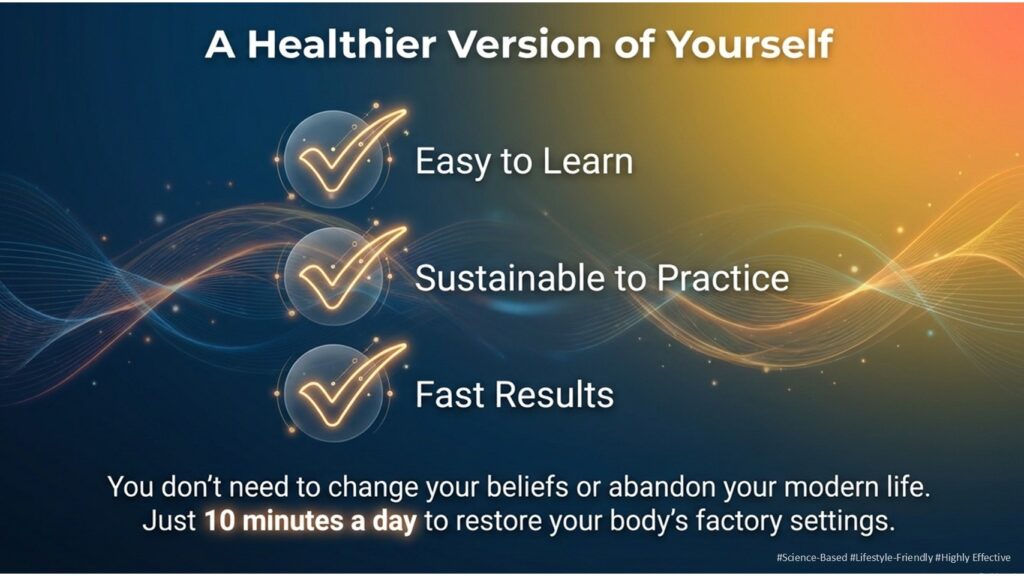
6. A Commitment: Easy to Learn, Sustainable to Practice, Fast to Feel Results
I understand you may still be skeptical, thinking Qigong sounds mystical. That’s okay.
I don’t ask you to believe in myths—I just ask you to give yourself a chance.
Bai Yin Qigong isn’t about becoming immortal.
It’s about becoming a healthier version of yourself.
You don’t need to abandon modern life.
You don’t need to change your beliefs.
Just invest 10–15 minutes a day, using a scientific Qigong approach, to restore balance in your body.
That is the difference between Bai Yin Qigong and traditional Qigong:
we preserve the essence, but express it in language modern people understand, with methods they can actually practice.
Free 1-on-1 Qi & Blood Health Consultation
We now offer Free 1-on-1 Qi and Blood Health Consultations.
Professionally trained Instructors will analyze your condition using language modern people understand, and help you find the most suitable entry point into modern Qigong.
[Click here to book your free consultation]
Give yourself 15 minutes to experience a health-cultivation method you can truly learn.
0 comments