

Ancient Wisdom for Contemporary Life
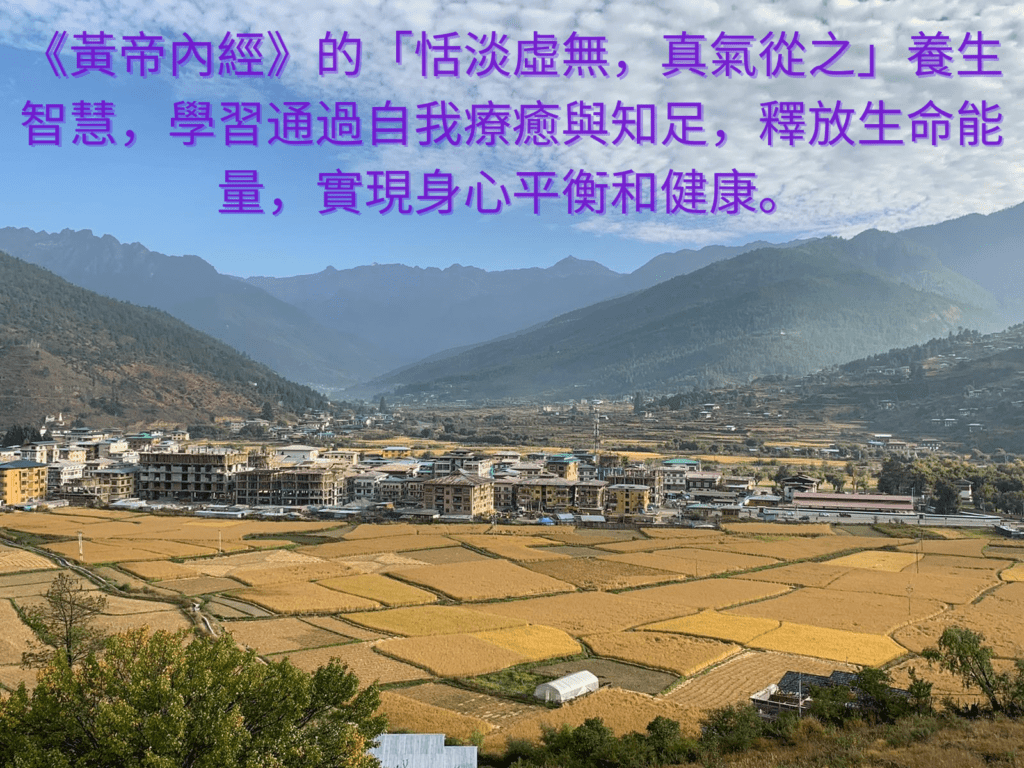
The Huangdi Neijing (Yellow Emperor’s Classic of Internal Medicine) contains a concise phrase that has influenced Chinese health philosophy for millennia: “恬淡虛無,真氣從之” (Tiándàn xūwú, zhēn qì cóng zhī). This eight-character teaching encapsulates sophisticated concepts about the relationship between mental state and physical vitality.
In English, this phrase translates approximately as “In calm emptiness, true qi follows” or “Through serene detachment, authentic vitality arises.” Understanding these classical concepts offers perspective on managing stress and cultivating wellness in modern contexts.
Deconstructing “Calm Emptiness” (恬淡虛無)
Dàn (淡): Moderation and Contentment
The character 淡 (dàn) suggests a quality of being unforced, natural, and free from excessive grasping. In classical health philosophy, this does not advocate abandoning all ambition or desire. Rather, it points toward finding appropriate balance between striving and acceptance.
Practical interpretations include:
Proportionate Pursuit
Understanding personal capacity and setting realistic goals prevents the stress of perpetual striving while maintaining meaningful direction.
Non-Comparative Growth
Focusing on personal development rather than relative standing reduces the anxiety of social comparison and supports genuine progress.
Present-Moment Appreciation
Recognizing current blessings rather than deferring satisfaction to future achievements cultivates ongoing contentment.
In contemporary terms, this principle suggests the value of intentional consumption, mindful goal-setting, and appreciation for what exists rather than fixation on acquisition.
Tián (恬): Inner Tranquility and Self-Soothing
The character 恬 (tián) carries etymological connections to self-contained peace and the capacity for self-regulation. In classical interpretation, it relates to an innate capacity for restoring inner equilibrium.
The concept encompasses:
Self-Regulation
Developing capacity to return to baseline calm without requiring external intervention or circumstances to change.
Release from Self-Criticism
Reducing unnecessary guilt and self-blame that undermine psychological wellbeing and drain vitality.
The classical text uses language suggesting that organisms possess inherent healing capacities, observable when animals tend their own wounds. Applied to human psychology, this points toward cultivating self-compassion and internal resources for emotional regulation.
Contemporary applications might include practices that promote self-soothing: creative activities, contemplative practices, or simply allowing time for mental processing without constant stimulation.
Xūwú (虛無): Spaciousness and Non-Attachment
The phrase 虛無 (xūwú) suggests emptiness or spaciousness, though not in a negative sense of absence. Rather, it points toward mental spaciousness free from cluttered thoughts, rigid attachments, and compulsive mental activity.
This concept relates to reducing psychological fixation—the tendency to grasp rigidly at preferences, opinions, or outcomes. Mental spaciousness allows greater flexibility and responsiveness to changing circumstances.
Reinterpreting Classical Idioms
“Tián bù zhī chǐ” (恬不知恥): Freedom from Shame
While this phrase typically translates as “shameless” in a negative sense, within health cultivation contexts it takes on different meaning: freedom from unnecessary shame or excessive concern with others’ judgments.
This reinterpretation suggests:
Liberation from Social Constraint
Reducing the burden of others’ expectations allows more authentic self-expression and reduces chronic psychological stress.
Self-Acceptance
Cultivating comfort with one’s authentic nature rather than maintaining exhausting facades.
The distinction here is between healthy social responsibility and paralyzing concern with judgment. The classical health perspective suggests that excessive shame consciousness undermines vitality.
“True Qi Follows” (真氣從之): Vitality Arising from Mental State
The second part of the classical phrase describes an outcome: when mental state achieves calm emptiness, “true qi follows”—authentic vitality naturally arises.
Implications of This Principle
Spontaneous Energy
Rather than forcing or manufacturing energy through stimulants or willpower, vitality emerges naturally from balanced mental-physical states.
Enhanced Resilience
Reduced psychological stress supports immune function and overall physiological resilience—a principle increasingly validated by psychoneuroimmunology research.
Natural Presence
A calm, centered mental state manifests as composed, confident presence without requiring performance or artifice.
This concept aligns with traditional understanding that qi—vital energy—flows most efficiently when not obstructed by mental tension, emotional turbulence, or physical strain.

Practical Application in Modern Life
Cultivating Contentment
Gratitude Practice
Regularly acknowledging present blessings shifts attention from perpetual striving to appreciation, potentially reducing stress and increasing satisfaction.
Intentional Consumption
Before acquiring new things, examining whether they serve genuine needs versus filling psychological voids created by advertising or social comparison.
Developing Self-Regulation
Reflective Practices
Engaging in activities that allow mental processing and self-connection: journaling, walking in nature, creative expression, or contemplative practice.
Self-Compassion
Treating oneself with the kindness typically extended to others, particularly when facing mistakes or limitations.
Creating Mental Spaciousness
Reducing Information Overload
Intentionally limiting exposure to constant stimulation, news cycles, and social media to create space for mental calm.
Slowing Pace
Building periods of unhurried time into daily routines allows nervous system downregulation and mental restoration.
Releasing Unnecessary Shame
Examining Judgments
Questioning whether concerns about others’ opinions serve genuine values or simply create paralyzing anxiety.
Authentic Expression
Gradually increasing willingness to express genuine preferences, interests, and perspectives rather than conforming to perceived expectations.
Integration with Qigong Practice
These principles directly inform qigong cultivation:
Mental Regulation (调神)
Qigong practice emphasizes calm, spacious awareness—directly cultivating the mental state described in “calm emptiness.”
Breath Regulation (调息)
Coordinated breathing supports both mental calm and qi circulation, embodying the principle that regulated mind and breath allow qi to flow naturally.
Physical Regulation (调身)
Gentle, mindful movement releases physical tension that reinforces mental agitation, supporting the integrated state where “true qi follows.”
The classical phrase thus describes both the method (cultivate calm emptiness through mental-physical practices) and the result (vital energy flows naturally).
Contemporary Relevance
Stress and Vitality
Modern research increasingly validates connections between chronic stress and numerous health conditions. The classical principle that mental calm supports vital energy aligns with contemporary understanding of how parasympathetic activation, reduced cortisol, and mental ease support physiological function.
Authenticity and Wellbeing
Psychological research on authenticity suggests that living in alignment with genuine values and reducing excessive concern with external validation supports mental health and life satisfaction—echoing the classical emphasis on reducing shame-consciousness and social comparison.
Balance in Achievement Culture
In environments emphasizing constant achievement and acquisition, the classical principle of contentment and moderation offers counterbalance. Finding equilibrium between growth and acceptance may support both sustained wellbeing and paradoxically, more sustainable achievement.
Conclusion
The classical phrase “恬淡虛無,真氣從之” encapsulates sophisticated understanding of mind-body relationships. Its core insight—that vitality flows naturally from mental calm, contentment, and spaciousness—offers valuable perspective for contemporary wellness.
Rather than viewing health primarily through the lens of intervention (adding supplements, treatments, or exercises), this classical wisdom emphasizes creating conditions where natural vitality can emerge: reducing excessive mental activity, releasing unnecessary attachments, and cultivating present-moment contentment.
For modern practitioners, these principles suggest that sustainable wellness requires attention to psychological states, not merely physical interventions. Qigong and similar practices offer methods for cultivating the inner conditions described in this classical teaching.
Whether understood through traditional concepts of qi or contemporary frameworks of stress physiology and mind-body integration, the fundamental insight remains valuable: calm presence supports vital health.
This article explores classical Chinese health philosophy as it informs qigong practice. These traditional concepts offer historical perspectives on wellness and should be understood as complementary frameworks rather than replacements for modern medical care.
